From Domesday Book to Village Local
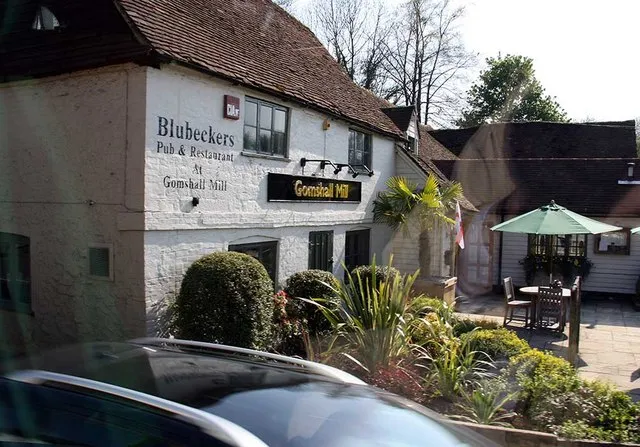
A mill at Gomshall is recorded in the Domesday Book of 1086, when the settlement appears as “Gomeselle” with assets including a mill valued at three shillings and fourpence. The current building dates to the 17th century, a timber-framed watermill that ground corn on the River Tillingbourne until the early 1950s. After decades as the village post office, the building was converted into a pub in 2010.
Following a period of closure, Farnham-based New Dawn Pubs invested a seven-figure sum in a comprehensive restoration and reopened the doors on 1 December 2022. The work earned recognition from CAMRA for outstanding conversion and restoration of a historic building.
The Waterwheel and the Building
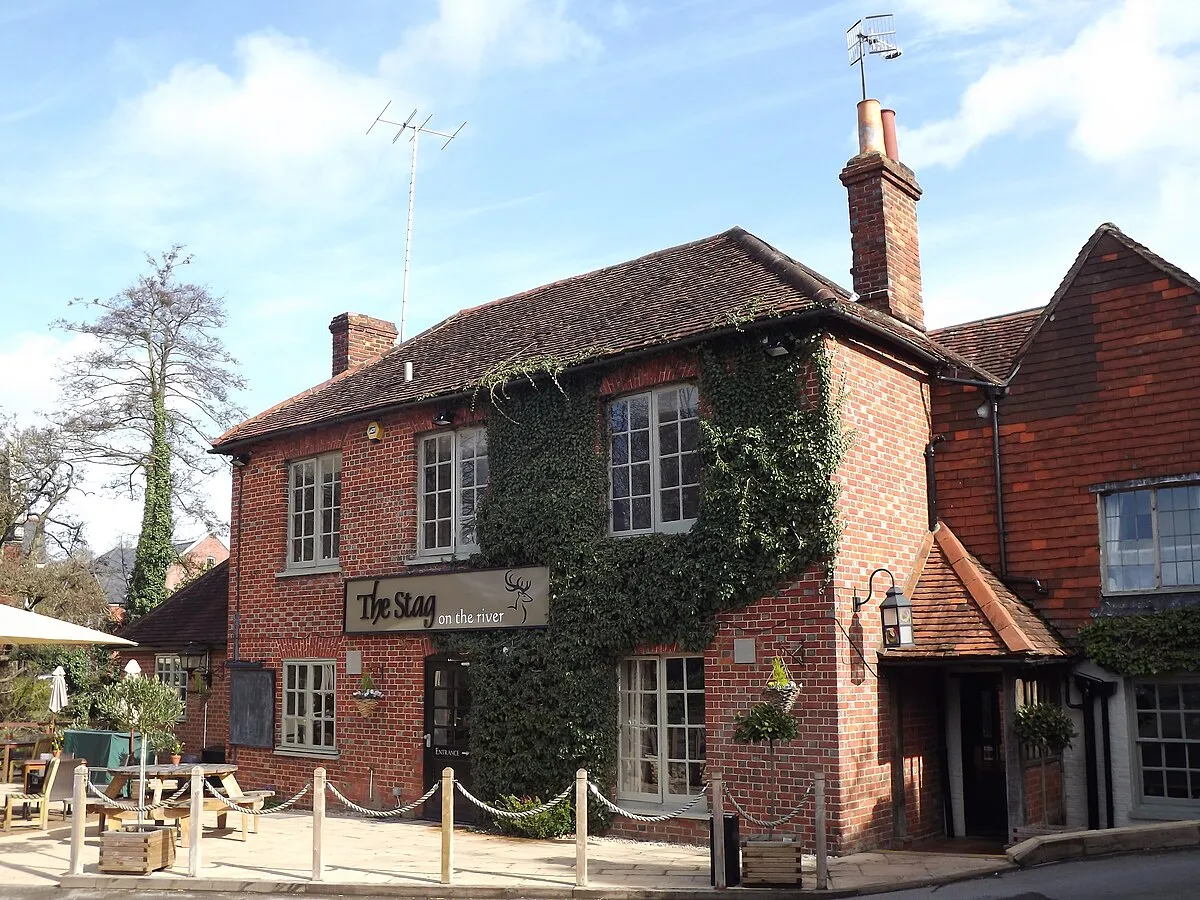
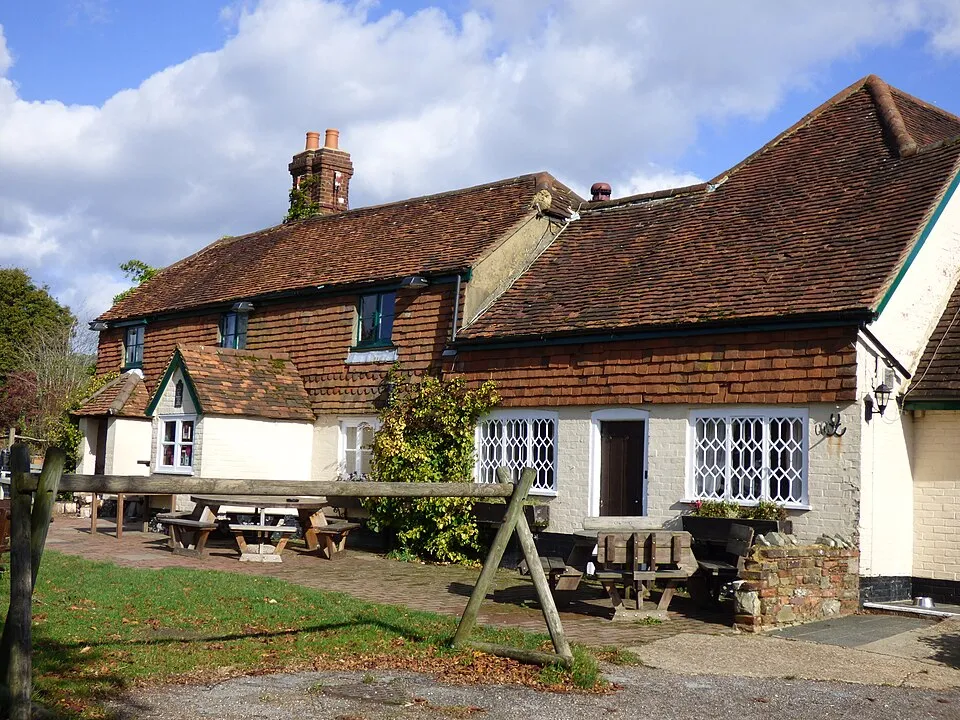
The restored waterwheel is the centrepiece of the pub. Dining areas are arranged across several levels around the mechanism, and a glass viewing bridge allows visitors to watch the Tillingbourne racing beneath their feet. A millstone from the 1950s is set into the floor of one of the dining spaces. The Grade II listed building retains its long, low timber-framed profile, with real fires, historic beams, and plenty of character throughout.
Food and Drink
The kitchen serves seasonal British pub fare: classic dishes with a contemporary twist, using locally and sustainably sourced ingredients. Sunday roasts are a particular draw, and the pub is widely noted for its dedicated gluten-free menu. Behind the bar, Fuller’s London Pride sits alongside three rotating guest ales from local breweries including Tillingbourne, Dorking, and Titsey. The pub holds CAMRA LocAle accreditation for its commitment to locally brewed real ale.
Outside, a riverside garden with its own outdoor bar and grill makes the most of the Tillingbourne setting in summer. The pub also hosts live music twice monthly and annual events including a duck race and fireworks party.
Gomshall and the Tillingbourne Valley
Gomshall sits in the heart of the Surrey Hills Area of Outstanding Natural Beauty, strung along the A25 between Guildford and Dorking. The village has its own railway station on the North Downs line, making it accessible from London Waterloo in just over an hour. A few minutes’ walk brings you to open countryside, and paths climb south towards Leith Hill, the highest point in south-east England, or east along the Tillingbourne Valley towards the famously photogenic village of Shere.
The wider valley is dotted with quiet hamlets: Abinger Hammer with its striking clock, Wotton where John Evelyn lived, and Friday Street hidden in its wooded hollow. This is prime walking and cycling country, criss-crossed by bridleways and the Greensand Way long-distance path. For property buyers, the Tillingbourne Valley offers the rare combination of deep countryside with a practical commute to London.