Hydestile's name is thought to derive from an old field or boundary marker, and the hamlet has existed as a scattered rural settlement for centuries. Its most significant chapter came in the early twentieth century when land from the Busbridge Hall estate was used to build the King George V Sanatorium, which opened in 1922 as a 230-bed tuberculosis hospital. The facility became nationally important for TB research, including early drug therapies and the manufacture of iron lungs.
During the Second World War, a second institution joined it: St Thomas' Hospital relocated from Lambeth to Hydestile to escape the Blitz. For decades, these two hospitals were the hamlet's largest landmarks. Both eventually closed and fell into disrepair, and the 52-acre site was redeveloped for housing in the late 1990s. The development, known as The Hydons, now occupies the former hospital grounds, though the original gatehouse and superintendent's house survive.
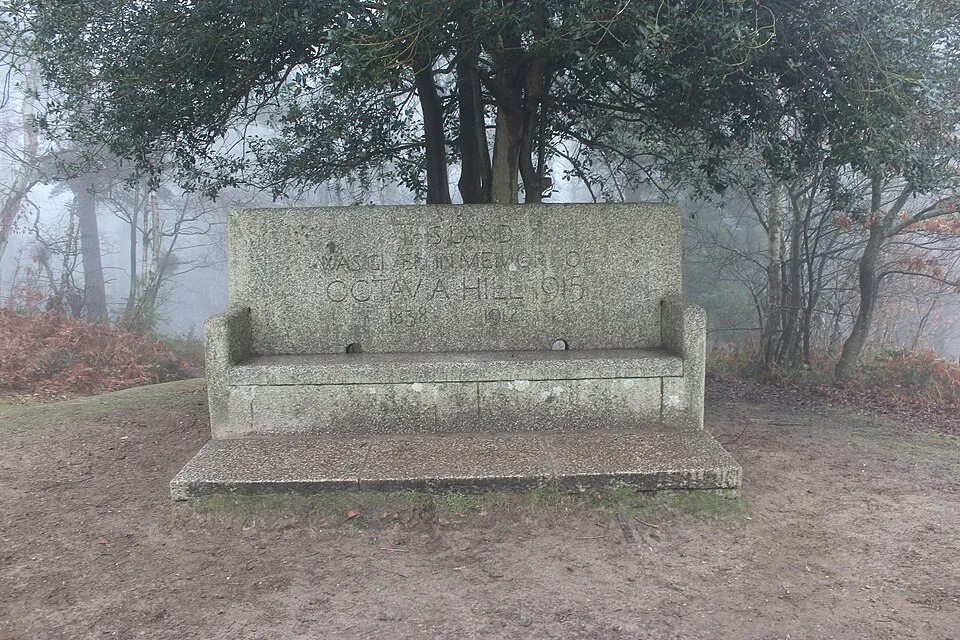
The nearby Hydon's Ball has been in National Trust ownership since 1915, acquired as a memorial to Octavia Hill, one of the Trust's three co-founders, who died in 1912. A stone seat at the summit commemorates her. The celebrated garden designer Gertrude Jekyll lived and worked at Munstead Wood in neighbouring Busbridge, and is buried at St John's Church nearby.